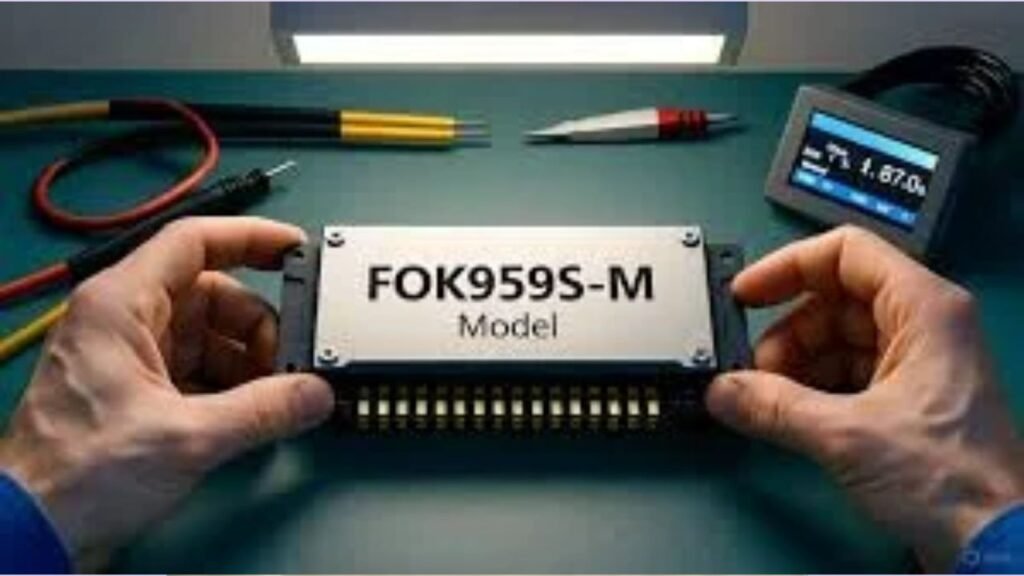
The fok959s-m model is one of those expressions that can be came upon by users when they need to find some technical explanation, identify a device, or gain some insight about its performance. In most instances, the model name is used without adequate explanation thus creating confusion on what it does, what it can and whether it will last well in the long run. This guide has been authored to eliminate such uncertainty by using methodical explanation as opposed to promotional words.
Rather than restating the generic descriptions, the text below dwells on the behavior of the model in actual use, its identification and why it still turns up in technical searches.
What the FOK959S-M Model Actually Is?
The fok959s-m model is a structured technical unit that is pre-programmed to perform under controlled parameters and be able to perform the same on a repeated use cycle. As opposed to models where feature density or experimental upgrades are of primary importance, this model emphasizes on operational balance and predictable output. The design method enables it to work dependably without having to recalibrate regularly or perform complicated user calibration.
The model underlines stability, instead of speed, and control, instead of complexity, when viewed through the functional perspective. All internal elements contribute to a particular role decreasing the non-needed strains on the system. This will allow the model to remain performance quality over the years even when operated in the environment that requires constant and continuous functioning.
The design of this model is frequently favored due to the balance component in the model in an environment where reliability is valued over innovation.
Why the FOK959S-M Model Continues to Be Searched?
Most of the technical models become obsolescent soon after newer models are released yet the fok959s-m model is still found in the user search as it satisfies the current practical demand. This model tends to be revisited by the users when they are appreciating the stability of their behavior, its maintainability, and little surprises about its operation.
Familiarity is the other factor that makes it relevant. Users can now trust the model to behave depending on the knowledge that a user gains about the model. Such familiarity limits the level of errors and enhances the effectiveness of work processes, especially in places where time and consistency are crucial issues.
Trust is expressed through search interest and this trust is established by a steady real-world performance and not just specifications.
Design Approach and Structural Characteristics
The internal design of the fok959s-m model reflects a disciplined engineering approach where restraint plays a central role. Instead of layering multiple systems that compete for resources, the structure emphasizes coordination between essential components. This reduces friction, heat buildup, and performance instability.
Such a design philosophy improves longevity because fewer components experience unnecessary stress. It also simplifies diagnostics, since issues tend to follow predictable patterns rather than random failure points. For users, this means fewer unexpected interruptions and clearer maintenance decisions. The overall structure favors long-term usability rather than short-term optimization.
Performance Behavior During Regular Operation
In everyday use, the fok959s-m model demonstrates consistent behavior rather than dramatic performance fluctuations. Output remains steady across repeated cycles, and response timing follows a predictable rhythm. This characteristic makes it easier for users to plan tasks without compensating for sudden system changes.
Unlike systems that deliver high output briefly and then degrade, this model maintains equilibrium. That balance supports sustained productivity, especially during extended operational periods. Users often notice that performance remains reliable even after long sessions, which reinforces confidence in the system. Consistency, rather than raw speed, defines its operational strength.
Typical Use Environments and Application Scenarios
The fok959s-m model adapts best to environments that value structure and control. It is commonly used in settings where workflows remain stable and performance expectations are clearly defined. Such environments benefit from equipment that behaves the same way each day without requiring constant oversight.
Typical application scenarios include controlled workspaces, long-duration operational setups, and situations where user intervention must remain minimal. The model performs best when workloads remain balanced rather than erratic, which aligns with its internal design philosophy. Its versatility comes from reliability rather than extreme flexibility.
How to Identify the FOK959S-M Model Correctly?
Correct identification is essential for maintenance, compatibility checks, and documentation accuracy. The fok959s-m model includes clear labeling that helps users verify the exact version they are working with. This prevents errors when ordering replacement components or referencing technical manuals.
Model identification usually involves visual inspection rather than specialized tools. The model name is placed in locations that are accessible without disassembly, which simplifies verification. Knowing the exact model name saves time and reduces the risk of mismatched components. Accurate identification forms the foundation of proper system management.
Maintenance Needs and Long-Term Care Expectations
The fok959s-m model has a manageable maintenance since there is no use of delicate and over-engineered elements in the system. Regular maintenance aims at checking, cleaning, and simple tightening instead of regularly changing parts. This will minimize downtime and make long-term expenses predictable.
In order to explain the expectations of maintenance, it is good to see them as proactive and not reactive. The following is a basic maintenance outline that is consistent with the way the model should work.
| Maintenance Interval | Recommended Action |
| Weekly | Visual inspection for wear or buildup |
| Monthly | Surface and component cleaning |
| Quarterly | Structural checks and fastener tightening |
| Yearly | Full operational performance review |
Following these steps helps maintain consistency and prevents avoidable degradation.
Common User Questions and Practical Clarifications
Users frequently ask whether the fok959s-m model is suitable for beginners, whether it requires professional supervision, and how it compares to newer alternatives. In most cases, the answers depend on expectations rather than technical limitations.
For clarity, the following points address common concerns in a straightforward manner:
- The model suits beginners because it does not demand constant adjustment or advanced configuration.
- Experienced users appreciate the predictable behavior that supports structured workflows.
- Replacement is rarely necessary unless performance requirements change significantly.
- Most issues resolve through routine checks rather than specialized intervention.
These clarifications help users make informed decisions without unnecessary upgrades.
Final Perspective on the FOK959S-M Model
The fok959s-m model is also relevant in the fact that it offers its users what they want to hear as far as stability, predictability and controlled performance over time are concerned. Instead of following the trends or quick-fix solutions, the model is centered on consistency, which is more practical in the application.
With the knowledge of the design of the model, the dynamics and the maintenance of the model, users can depend on it. It is that reliability that has made the fok959s-m model remain popular and one that people trust even where very recent alternatives are available.
Read More Blogs:- To Winning Kesllerdler45.43 and the Power of Calm Progress