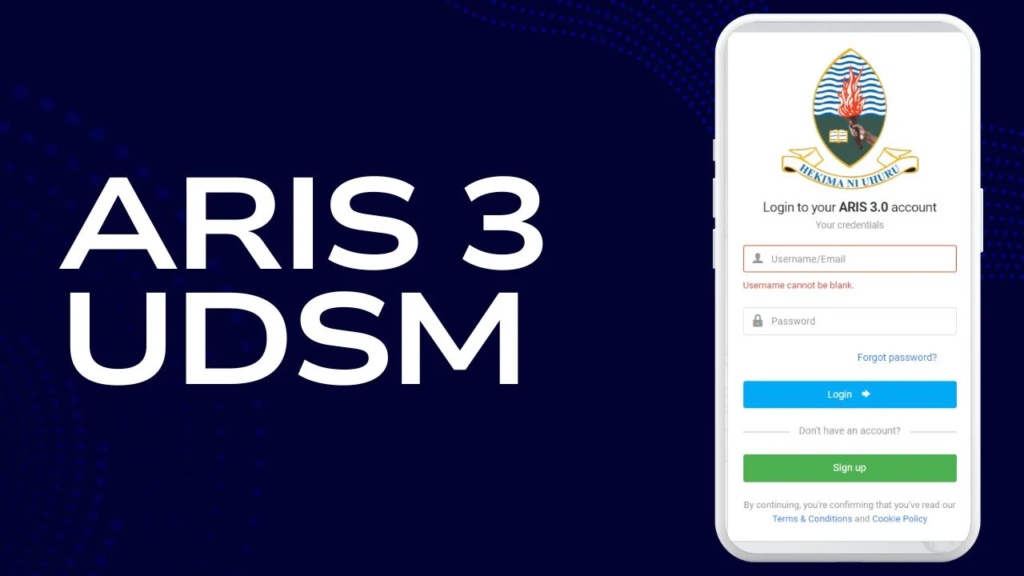
University life at the University of Dar es Salaam involves many moving parts that must work together smoothly. Students are expected to register on time, track their academic progress, and complete payments without delays. aris 3 udsm plays a central role in making these processes manageable by offering one structured digital system. Instead of depending on multiple offices or manual records, students interact with a single platform that reflects their academic journey accurately.
Over the years, this system has become deeply connected to daily student life. From the first semester to graduation, academic decisions, records, and confirmations flow through it. Understanding how aris 3 udsm works early helps students avoid unnecessary stress later. When used properly, it supports consistency, transparency, and academic stability across all levels of study.
What is ARIS 3 UDSM?
aris 3 udsm is the official Academic Registration and Information System of the University of Dar es Salaam. It was developed to centralize student academic data and reduce dependency on physical paperwork. The system brings together registration, academic records, and financial processes under one secure digital environment.
The platform exists to ensure accuracy and accountability. Every action performed inside the system is logged and reflected across related sections. Because of this structure, students and university administrators rely on the same data source, which reduces errors and miscommunication. This shared access builds trust in academic records and administrative decisions.
How ARIS 3 UDSM Supports Students Throughout Their Studies?
During a student’s academic life, requirements change each year. aris 3 udsm adapts to these needs by remaining relevant at every stage. First-year students often use it for initial registration and fee confirmation. Continuing students rely on it for course selections and results, while finalists use it to verify academic completion.
The platform supports both undergraduate and postgraduate students. It stores academic history securely and allows access whenever needed. Because of this, students do not need to request records repeatedly from departments. Instead, information remains accessible in one consistent location.
Core Functions of ARIS 3 UDSM
The strength of ARIS 3 UDSM lies in how many essential tasks it combines into one system. Rather than focusing on only registration or results, it supports students across the full academic cycle.
Students commonly use the platform for:
- Course and semester registration
- Viewing academic results and transcripts
- Requesting control numbers for payments
- Tracking tuition fee status
- Managing postponement or continuation of studies
Because all these services are linked, actions taken in one section automatically reflect across the system. This reduces errors and ensures records remain consistent.
ARIS 3 UDSM Login Process and Secure Account Access
Accessing the university academic system is usually the first task students face each semester. This section explains the login process clearly so that students can enter their accounts without mistakes or delays.
Step 1: Opening the Official Login Page
The first step is visiting the official portal using a secure browser. Students should type the correct web address directly to avoid landing on unofficial pages. Opening the correct page ensures the system loads the verified login interface designed by the university.
Step 2: Entering Username or Email Correctly
Once the page opens, the system asks for a username or registered email address. This information must match what was provided during account creation. Leaving the field empty or entering incorrect details prevents access and triggers an error message.
Step 3: Adding the Password Carefully
After entering the username, students must type their password with attention. Passwords are case-sensitive, so even small typing errors can block access. Using a personal device helps avoid keyboard layout issues.
Step 4: Using the Password Recovery Option
If login fails due to a forgotten password, the recovery option is available below the login fields. This feature guides users through resetting access using registered contact details. Completing this step restores account access without administrative visits.
Step 5: Completing Login and Dashboard Access
After entering correct credentials, clicking the login button opens the student dashboard. From here, academic and administrative information becomes visible. A successful login confirms that the account is active and ready for use.
Creating and Managing an ARIS 3 UDSM Account
Creating an account is the first official step that connects a student to the university’s digital academic environment. This process ensures that personal details, academic records, and future activities remain linked under one verified profile. Accuracy during setup matters because the same information is used throughout the academic lifecycle.
Step 1: Visit the Official Registration Page
The students will start with opening the official portal of ARIS in a browser and finding the account creation option. The registration page serves as the point of entry to all the new users of the system.
Step 2: Select the Appropriate Account Type
The system requires the user to select the type of account depending on their academics. This choice assists the platform in adjusting access and features in the right way.
Step 3: Provide Personal Identification Data
Learners are required to complete their names as they are indicated in the admission documents. This is done in order to maintain uniformity in academic records and avoid the verification problems in the future.
Step 4: Create a Unique Username
A username is required for future logins and system identification. Choosing something simple and memorable helps reduce login errors.
Step 5: Set and Confirm a Secure Password
The password protects academic and financial information. Re-entering it confirms accuracy and avoids access problems.
Step 6: Provide a Mobile Number for Verification
A valid phone number supports identity checks and recovery options. It also helps the system communicate important updates.
Step 7: Add an Active Email Address
Email is used for official notifications and account recovery. Providing an active address ensures important messages are not missed.
Academic Records and Results Tracking in ARIS 3 UDSM
One of the most trusted functions of aris 3 udsm is academic record management. The system allows students to view semester results, cumulative performance, and course history without delay. This access helps students monitor their progress and make informed academic decisions.
Because results are updated directly by the university, students can rely on the accuracy of the information. Graduate students especially benefit from being able to review long-term academic progress at any time. This transparency reduces uncertainty and keeps students informed about their standing.
Financial Management and Payments Through ARIS 3 UDSM
Financial transactions are a critical part of academic administration. aris 3 udsm simplifies this process by allowing students to request control numbers and complete payments digitally. Once a control number is generated, students can pay fees using approved mobile money services.
Payments made through the system are automatically reflected in the student’s account. This reduces delays and minimizes the need for manual confirmation. Students are encouraged to confirm transaction status after payment to ensure records update correctly.
| Payment Method | Availability |
| M-Pesa | Available |
| Airtel Money | Available |
| Tigo Pesa | Available |
This structure ensures that financial records remain accurate and accessible.
Handling High Traffic and Connectivity Issues in ARIS 3 UDSM
At certain times of the academic year, aris 3 udsm experiences heavy traffic. These are usually during registration deadlines or examination results. Students can experience problems with slow loading or temporary access in such periods. Such situations tend to be temporary and they are associated to server demand as opposed to account problems. Those students with problems are recommended to re-try with some rest or use the system during the off-peak. Most of the times one can be patient in these times and this will result in successful access.
Best Practices for Consistent Use of ARIS 3 UDSM
To avoid last-minute stress, students should use ARIS 3 UDSM regularly rather than only during deadlines. Checking updates weekly helps ensure no important notices or requirements are missed.
Recommended habits
- Log in regularly to monitor updates
- Confirm payments after transactions
- Save login credentials securely
- Log out when using shared devices
These simple practices help students maintain accurate records and avoid unnecessary administrative problems.
Common Student Activities Within ARIS 3 UDSM
Students interact with aris 3 udsm in different ways depending on the academic calendar. Some activities occur only once per semester, while others happen more frequently.
| Activity | Typical Frequency |
| Course registration | Once per semester |
| Fee payment | As required |
| Results review | After examinations |
Understanding these patterns helps students plan their interactions efficiently and avoid unnecessary delays.
Why ARIS 3 UDSM Remains Central to Academic Life?
Over time, aris 3 udsm has become more than an administrative tool. It now represents the official academic record for each student. Decisions related to progression, graduation, and academic status rely on data stored within the system. Because of this central role, students are encouraged to treat the platform as a regular academic resource. Familiarity with its structure reduces confusion and improves confidence in managing university responsibilities.
Conclusion
For students at the University of Dar es Salaam, aris 3 udsm is an essential academic companion rather than a background system. It connects registration, results, and payments into one reliable structure. When students understand how to use it properly, academic processes become clearer and more predictable. By engaging with the platform consistently, students reduce administrative stress and maintain accurate academic records throughout their studies.
Read More Blogs:- Davyomwez: How a Unique Digital Identity Builds Authority